

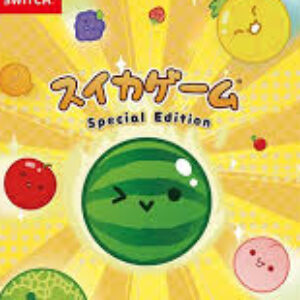
Suika Game
There’s a peculiar genre of game that’s been quietly taking over people’s phones, and it goes... View more
Organizer:
- Organized by
-
-

Dropping Fruit Into Chaos: Why the Watermelon Puzzle Is Oddly Impossible to Put
-
Dropping Fruit Into Chaos: Why the Watermelon Puzzle Is Oddly Impossible to Put
There’s something deeply satisfying about watching two identical
fruits collide and quietly fuse into something bigger. No explosions,
no dramatic sound effects — just a soft pop and a slightly
rounder piece of fruit sitting where two smaller ones used to be. If
you haven’t stumbled across this genre yet, you’re in for a pleasant
surprise. And if you already have, you probably know exactly how it
feels to lose an hour without noticing.The watermelon puzzle trend has been quietly taking over casual
gaming circles, and the best gateway into it is a browser-based gem
called Suika Game. Simple
on the surface, surprisingly deep once you’re in — here’s
everything you need to know to get started and, more importantly, to
last longer than your first three attempts.What’s Actually Going On Here?
The concept sounds almost too straightforward to be interesting.
You drop fruit into a container. When two pieces of the same fruit
touch, they merge into the next size up. Start with a cherry, merge
two cherries into a strawberry, two strawberries into a grape, and so
on — all the way up to a glorious, screen-dominating watermelon.The catch? Gravity is real. Fruit piles up. The container fills
faster than your brain anticipates. If the pile overflows past the
top line, the game ends. What looks like a gentle, almost meditative
puzzle reveals itself to be a tense balancing act between planning
and improvisation.Suika Game captures this loop perfectly. It runs in your browser
with no installation required, loads in seconds, and hands you
control almost immediately. The interface is clean, the physics feel
satisfying, and the fruit designs are cheerful without being
childish. It’s the kind of game that works equally well as a
five-minute distraction or a focused evening session where you’re
genuinely trying to beat your personal best.How a Typical Round Plays Out
When you first launch the game, you’ll see an empty box and a
piece of fruit waiting at the top — usually a cherry or strawberry,
the smallest sizes. You click (or tap) to drop it wherever you aim.
Then another fruit appears, and the process continues.The early phase feels calm. Small fruits land cleanly, merges
happen quickly, and your score ticks upward. This is the phase where
most players make their first critical mistake: dropping fruits
without thinking about what’s coming next. The game shows you the
next fruit you’ll receive, and ignoring that preview is a
reliable path to an early ending.As medium-sized fruits start accumulating, the real puzzle
emerges. A watermelon or pineapple takes up significant space.
Misplace one and it blocks potential merges, creating awkward gaps
that smaller fruits fall into and can’t escape. Suddenly the pile is
uneven, you’re desperately trying to create merges on one side while
the other creeps toward the danger line.That tension — controlled chaos slowly tipping toward actual
chaos — is exactly what makes the game so compelling round after
round.Tips That Will Actually Help
Think two moves ahead, not just one. The
next-fruit preview is your most important tool. Before dropping your
current piece, already be deciding where the following one
should go. This small habit dramatically improves how long your runs
last.Aim for the middle early on. Dropping fruit along
the edges might seem safe, but edge pieces often get trapped and
can’t merge. Keeping your stack central gives everything more room to
settle and find matches.Don’t chase merges too aggressively. It’s
tempting to angle every drop toward a potential match, but forced
placements often create worse problems than just placing the fruit
somewhere stable. Sometimes a clean stack beats a risky merge.Let physics work for you. Fruit rolls and settles
after landing. A piece dropped slightly off-center can slide into a
merge you didn’t directly engineer. Watch how pieces move after
impact — you’ll start to anticipate it and use it intentionally.Accept that the first run is a write-off. Every
player’s debut session ends in mild confusion. That’s fine. The
second run is where the lightbulb moment happens, when the merging
chain starts to feel intuitive rather than accidental.A Puzzle Worth Your Time
What makes the watermelon puzzle format genuinely special is how
it rewards patience over reflex. You’re not racing a clock or
responding to threats — you’re thinking spatially, managing a small
physics simulation, and trying to stay one step ahead of entropy.
It’s a rare blend of cozy and cerebral.Suika Game is one of
the most accessible entry points into this style of play. No account
needed, no tutorial to sit through, just fruit, gravity, and the
quiet ambition of finally getting that watermelon to appear. Give it
a round or two — just know that “a round or two” has a
way of becoming considerably more.
Sorry, there were no replies found.
Log in to reply.